
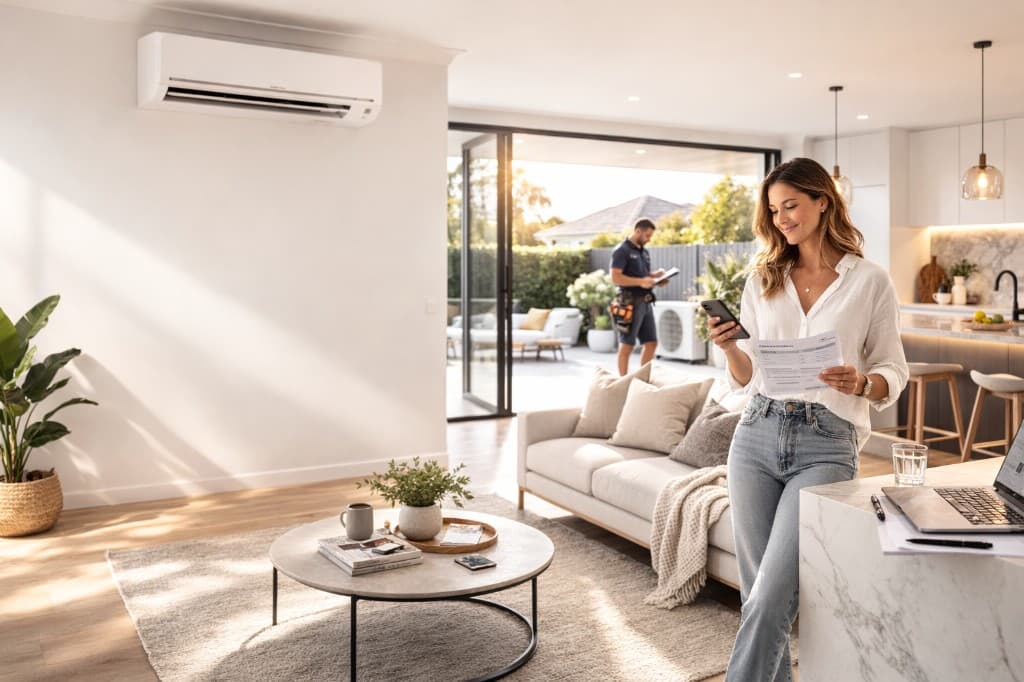
Air Conditioning Currans Hill
Currans Hill homeowners, from the established 1990s estates near Currans Hill Drive to the newer builds in Manooka Valley, face the brunt of Western Sydney’s summer heat. Whether you are replacing an end-of-life ducted system or installing a multi-head split system for a west-facing home near Mount Annan Botanic Garden, we provide the local trade expertise you need.
Every installation, service and repair is performed by our team of NSW-licensed contractor partners under Quotcha's coordination.
What we do
How can we help in Currans Hill?
Currans Hill is part of our wider Camden air-conditioning service area.
Local context
What Affects Air Con Quotes in Currans Hill
Currans Hill (NSW 2567) has factors that materially affect installation and repair pricing.
1990s Ducted System Lifecycle
Many homes in the original Currans Hill estates, particularly around Currans Hill Drive and Tramway Drive, feature ducted systems installed in the mid-to-late 90s that are now reaching end-of-life and require high-efficiency R32 refrigerant upgrades.
Western Slope Exposure
Properties situated on the western slopes overlooking the Australian Botanic Garden Mount Annan experience significant afternoon heat loads, often requiring units with higher cooling capacities (kW) to maintain comfort during 40°C+ summer days.
Manooka Valley Build Standards
The newer Manooka Valley precinct features more modern insulation and tighter building envelopes than the older 1990s brick-veneer homes, meaning air conditioning sizing must be precisely calculated to avoid short-cycling.
Motorway Particulate Filtration
Homes located within 500m of the Hume Motorway or Narellan Road corridor benefit from high-grade PM2.5 filters to manage the increased road dust and particulates that can otherwise accumulate on indoor evaporator coils.
Roof Cavity Heat Near Jack Nash Reserve
The standard pitched tile roofs common near Jack Nash Reserve can reach extreme temperatures; local installers often recommend solar-powered roof ventilators to assist ducted systems in these specific 1990s-era builds.
Camden
Pricing, installation and repair details for Camden
Typical air conditioning prices, what an install or repair involves, licensing checks and how the process works are covered on our Camden air conditioning page so this page can stay focused on what is specific to Currans Hill.
FAQs
Air Conditioning Currans Hill Frequently Asked Questions
My 90s-era ducted system in the original Currans Hill estate is failing; should I repair or replace it?
Most systems in the older parts of Currans Hill use R22 refrigerant, which is now obsolete and expensive to source. Given these units are often 20+ years old, replacing them with a modern inverter system is usually more cost-effective than repairing a failed compressor or rusted outdoor condenser.
Does the hilly terrain in Currans Hill affect my outdoor unit placement?
Yes, many blocks in Currans Hill have significant gradients. Installers often need to construct level concrete pads or use specialized wall brackets to ensure the outdoor condenser remains level, which is critical for proper oil return to the compressor.
Which air conditioning is best for the newer Manooka Valley homes?
Because Manooka Valley homes often have smaller outdoor footprints and better insulation, slimline side-discharge ducted units or multi-head split systems are popular choices to save space while meeting modern BASIX requirements.
What size split system do I need?
For a typical bedroom (10–15m²), a 2.0–2.5kW split system is sufficient. Living areas (25–40m²) generally need 5.0–7.0kW. Open-plan living/kitchen areas may need 7.0–9.0kW. West-facing rooms with afternoon sun exposure should size up by 0.5–1.0kW. A proper heat load calculation is recommended.
Helpful Guides
Air Conditioning Guides for Currans Hill Homeowners
We Also Service These Nearby Camden Areas
Air conditioning installation and repairs across every suburb near Currans Hill.
Other Trades in Currans Hill