
Last updated 12 May 2026·Quotcha editorial team — built from real Australian quote data
In this guide
- How much does ducted air conditioning cost in Australia?
- Cost by home size (3-bed, 4-bed, double-storey)
- Equipment cost vs install labour
- Zoning — what it is and what it adds to the price
- Brand price differences (Daikin, Mitsubishi, Fujitsu, ActronAir)
- Running cost — what to budget per quarter
- Common quote red flags
Ducted air conditioning in Australia typically costs $9,000 to $25,000 installed, with most 3-4 bedroom single-storey homes landing in the $11,000-$16,000 range for a quality reverse-cycle system with basic zoning. Where you sit in that range depends on three things in roughly this order: home size and layout, brand of equipment, and how many zones you specify. Beyond that, regional pricing variation, roof access, and how honest your installer is about what is included make up the rest.
This guide breaks down what you should actually be paying in 2026, line item by line item, so you can spot a quote that is padded — or worse, one that is suspiciously cheap because the installer is planning to under-size your capacity.
How much does ducted air conditioning cost in Australia?
For a fully installed reverse-cycle ducted system in a typical Australian home, expect to pay somewhere between $9,000 and $25,000+ depending on home size, brand, zoning, and metro vs regional pricing. The genuine sweet spot for most families — a 4-bedroom single-storey home with 4 zones and a mid-tier brand like Mitsubishi Heavy Industries or Fujitsu — sits around $13,000 to $15,000.
The price covers far more than just the equipment box on the side of the house. A real ducted quote includes:
- Outdoor compressor unit (the big one outside)
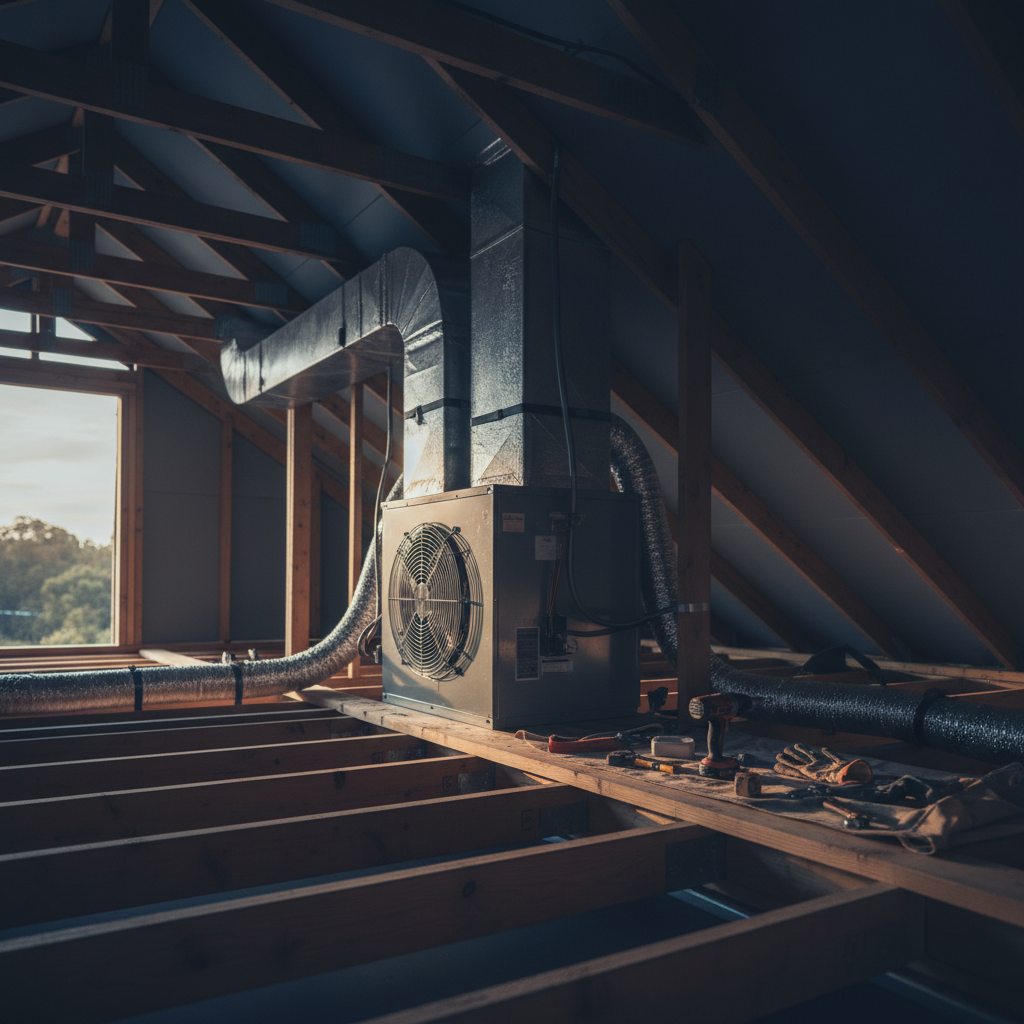
- Indoor fan coil unit (sits in the roof cavity)
- Insulated flexible ducting running from the fan coil to each room
- Ceiling grilles or vents in each conditioned room
- Return air grille (usually one large grille in a hallway)
- Zone motors and zoning controller (the wall-mounted touchscreen)
- Refrigerant piping between indoor and outdoor units
- Electrical work — dedicated circuit, isolator switch, sometimes a switchboard upgrade
- Commissioning, testing and certificate of electrical compliance
Anything missing from that list on a written quote is either being skipped or sneaked into a "site variation" extra later. Both are problems.
State and city pricing varies more than people realise. Sydney and Melbourne installs are consistently the most expensive in the country — labour rates are higher and competition for licensed refrigeration techs is brutal. Brisbane and Perth tend to sit 5-10% below Sydney pricing. Regional NSW, VIC and QLD often come in 10-15% cheaper again, though you can lose that saving if a metro-based installer charges travel.
Cost by home size (3-bed, 4-bed, double-storey)
Home volume — not floor area — is what actually drives sizing and price. A 4-bedroom home with 2.4m ceilings is a very different job to one with 2.7m raked ceilings. Use these as 2026 benchmark ranges:
| Home size | Installed cost (range) | Typical capacity (kW) | Zones |
|---|---|---|---|
| 3-bed single-storey (~140 sqm) | $9,000 - $13,500 | 10-12.5 kW | 3 |
| 4-bed single-storey (~180-220 sqm) | $11,000 - $16,000 | 12.5-16 kW | 3-4 |
| 4-bed double-storey | $14,000 - $22,000+ | 14-18 kW (or 2 systems) | 4-6 |
| 5-bed (single or double) | $16,000 - $25,000+ | 16-20 kW (often 2 systems) | 5-8 |
Double-storey homes nearly always cost more than the floor-area maths suggests, for two reasons. First, ducting has to run through two separate ceiling cavities — which often means a longer install and sometimes a second indoor unit. Second, you really want separate zoning per floor so you can cool bedrooms upstairs at night without freezing out a downstairs living area. Adding upstairs/downstairs zoning correctly typically adds $1,500-$3,000 to the price compared to a "lump it all together" job.
A red flag worth knowing: if a quote for a 4-bed double-storey home comes in below $13,000, the installer is almost certainly planning to fit a single 14kW unit with no per-floor zoning. It will run, but you will be unhappy with the comfort within 12 months.
Equipment cost vs install labour
A useful rule of thumb for evaluating quotes — the price of a ducted system breaks down roughly as:
- Equipment (indoor + outdoor units): 50-60% of total
- Install labour (1-2 licensed techs over 2-3 days): 30-35%
- Ducting, grilles, zoning hardware, electrical sundries: 10-15%
So on a $14,000 4-bedroom install, you are looking at roughly $7,500-$8,500 in equipment, $4,200-$4,900 in labour, and $1,400-$2,100 in materials. If a quote shows equipment as 75%+ of the price, the installer is light on labour and is likely to rush the job. If labour is 50%+, you are paying for someone else's overheads.
By law, anyone handling refrigerant in Australia must hold an ARCtick licence (Australian Refrigeration Council). The licensed refrigeration handler is who actually charges and commissions the system — not the apprentice running ducting. If the quote does not name the licensed installer or include their ARCtick number, ask for it before paying a deposit. Unlicensed installs void manufacturer warranties and are illegal.
You also need a licensed electrician for the dedicated circuit and isolator. Some companies have an in-house sparky, others sub-contract. Either is fine — but the certificate of electrical compliance must be issued in your name and lodged with the relevant state authority. No certificate, no insurance cover if something goes wrong.
Zoning — what it is and what it adds to the price
Zoning is the single most important spec on a ducted quote, and the one most commonly downgraded to win a price war.
A "zone" is a group of rooms (often just one room) that can be opened or closed independently using a motorised damper in the ducting. The zoning controller — the touchscreen on your wall — lets you choose which zones are active, which means you can run the system at lower capacity instead of cooling rooms nobody is in.
Typical zoning setups:
- 3-zone basic: living areas / master bedroom / other bedrooms. Suitable for small 3-bed homes.
- 4-zone standard: living / master / kids bedrooms / guest or study. Most 4-bed single-storey homes should be on 4 zones.
- 6-zone: per-room control on bedrooms, separate living and dining, plus per-floor splits for double-storey. Recommended for 4+ bed double-storey or any home over ~220 sqm.
- 8-zone: large 5+ bed homes, or homes with home offices / granny flats / poolside areas.
Each additional zone typically adds $200-$500 to the install price (motor, damper, wiring back to the controller). On a $14,000 base quote, going from 3 zones to 6 zones might add $900-$1,500. That is genuinely worth it — running a 16kW system with only 2 zones active draws far less power than running it across the whole house, which is where most of the long-term savings on a ducted system actually come from.
What is not worth paying for: "smart" zoning systems (MyAir, Zone Master, Hitachi airTouch etc) usually add $1,200-$2,500 over basic zoning. They are nice but not required for the system to work properly. If you want the upgrade, fine — but make sure your installer has separated it as a line item so you can compare.
Get a quote in your suburb
See real prices for jobs like this in your area — we use actual quote data from local tradies.
Brand price differences (Daikin, Mitsubishi, Fujitsu, ActronAir)
Brand choice can swing the equipment cost by 25-30% for the equivalent capacity. Here is how the major Australian brands stack up in 2026:
Premium tier (~15-20% price premium):
- Daikin — the default premium pick in Australia. Excellent reliability, strong dealer network, easy to get parts even in 10 years. Ducted systems start around $7,500 ex-install for 10kW.
- Mitsubishi Electric — comparable to Daikin on quality, slightly quieter outdoor units. Premium Inverter range is the one to ask for.
Mid-premium tier:
- ActronAir — Australian-made (Sydney). The Que and ESP Plus ranges are excellent for hot dry climates and have variable-capacity tech that suits zoning particularly well. Often 10-15% cheaper than Daikin for similar specs.
Mid tier:
- Mitsubishi Heavy Industries — separate company from Mitsubishi Electric, often confused. Solid mid-range performer, usually 10-15% below Daikin pricing.
- Fujitsu — well-priced reverse-cycle range, strong warranty, very common in QLD. Good value for money.
- Panasonic — mid-range with nanoe X air purification gimmick. Reliable units, dealer network is thinner than Daikin.
Budget-mid tier:
- LG — solid hardware, typically 15-25% cheaper than Daikin for equivalent capacity. Warranty and dealer support is the weak spot — make sure your installer offers their own labour warranty on top.
A common installer trick: quote a premium brand model number, but actually fit a base-spec variant (e.g. quote a Daikin Premium Inverter, install a standard inverter). The capacity numbers look the same, but inverter quality, warranty, and efficiency differ. Always cross-check the exact model number on the quote against the manufacturer's website before signing.
Running cost — what to budget per quarter
A 6-star reverse-cycle ducted system in a 4-bedroom NSW home, used "normally" (zoning across the day, on for 4-8 hours), typically costs $300-$600 per quarter to run. The range is wide because:
- Tariff matters more than appliance. A flat-rate plan at 32c/kWh runs up bills fast. A time-of-use plan that drops to 22c off-peak, paired with running the system harder during shoulder periods, can drop quarterly running cost by 20-30%.
- Solar changes the maths entirely. Running ducted during daylight hours when you have rooftop solar can effectively be free for the cooling portion. Many Sydney households now run ducted aircon during the day specifically to soak up solar export they would otherwise be paid 5c/kWh for.
- Climate zone. Brisbane and Perth households use cooling more months per year. Melbourne uses ducted heating heavily over winter — a reverse-cycle ducted system used as primary heating can easily cost $600-$900 per winter quarter alone.
- Insulation and ceiling. A 1990s home with R2 ceiling batts will cost roughly twice as much to cool as the same home re-insulated to R5.
What you should not do is run the whole house non-stop on a single zone setup — that is when ducted gets a (deserved) reputation for blowing up bills. The whole point of zoning is that you only condition rooms you are using.
Common quote red flags
Six things to look for when comparing ducted quotes — any one of these means push back before signing:
-
No capacity (kW) stated for your home volume. A proper installer does a sizing calc based on cubic metres, glazing, orientation, and insulation. If they walked through your house in 5 minutes and "estimated" 14kW for a 4-bed double-storey, they are guessing. Under-sized systems run at 100% all the time and burn out years early.
-
No zoning included, or "zoning to be discussed". Zoning should be specified upfront — number of zones, where each zone covers, and whether the controller is included. A vague answer here means a price increase later.
-
Vague "ducting" line item with no metres. A real quote specifies how many metres of insulated flexible ducting and the rating (R0.6, R1.0, R1.5). R1.5 is significantly more efficient than R0.6 in a hot Australian roof cavity but costs about 30% more — make sure you know which you are getting.
-
No electrical work mentioned. Every ducted install needs a dedicated circuit and isolator. Many also need a switchboard upgrade. If electrical is not on the quote, either the installer is assuming you will pay extra for it, or worse — they plan to run it off an existing circuit (illegal and dangerous).
-
No certificate of compliance line item. Both the electrical certificate and the ARCtick refrigerant handling documentation should be itemised. These are legal requirements, not extras. If they are not on the quote, you have no proof the work was done by licensed trades, and your insurance claim will be denied if something goes wrong.
-
Suspiciously cheap with a premium brand listed. If one quote is $4,000 below the others and lists a Daikin Premium Inverter at the same kW capacity, the installer is either fitting a different (cheaper) model than written, planning to under-size the install, or skipping zoning hardware. Cheap ducted is almost never a bargain — it is a future repair bill.
A balanced ducted quote in 2026 should be itemised across roughly 8-12 lines, name the licensed installer's ARCtick number, specify the exact model number of indoor and outdoor units, list zone count and ducting metres, and include both certificates of compliance. If you have three quotes and one is dramatically cheaper, ask each installer to break down their pricing against this list — the gap usually disappears once you compare apples to apples.
When you are ready to lock in a quote, the smartest 10 minutes you can spend is having an independent set of eyes audit the line items before you sign. That is exactly what Quotcha does — we benchmark your ducted quote against real installs in your suburb and flag the spots that look out of line, so you can negotiate from a position of knowing what is fair.
Frequently asked questions
How much does ducted aircon cost for a 4-bedroom house in Australia?
Expect $11,000-$16,000 installed for a single-storey 4-bedroom home with a basic 3- to 4-zone setup, and $14,000-$22,000+ for a double-storey 4-bed where the installer has to run ducting through two ceiling cavities and add per-floor zoning. Sydney and Melbourne quotes typically sit at the top of those ranges, while regional NSW and QLD often come in 10-15% lower. Premium brands like Daikin or Mitsubishi Electric add roughly 15-20% over budget brands for the equivalent capacity.
Is ducted air conditioning cheaper to run than multiple split systems?
Per zone, no — a split system is usually cheaper to run because it only conditions one room. Ducted becomes competitive (and often cheaper overall) when you actually use zoning properly: cooling just the living areas during the day and bedrooms at night, rather than running 4-5 separate splits. A 6-star reverse-cycle ducted unit in a 4-bed Sydney home typically costs $300-$600 per quarter to run if you use 2-3 zones at a time. Run the whole house non-stop and you can easily double that.
How long does ducted installation take?
A standard single-storey 3-4 bedroom install takes 2 days for an experienced two-person crew: day one is the indoor/outdoor units, ducting and grilles, day two is electrical, zoning controls, commissioning and your certificate of compliance. Double-storey or retrofits into older brick homes with limited roof space can stretch to 3-4 days. If a quote promises a 4-bed double-storey install in a single day, ask exactly which corners they plan to cut.
Do I need council approval for ducted air conditioning?
For a standard residential install in a freestanding home, no council approval is needed in most NSW, VIC and QLD councils — it falls under exempt development. You will need approval (or at minimum strata committee sign-off) if you live in a heritage-listed property, a strata apartment or townhouse, or if the outdoor unit is being mounted somewhere visible from the street in a heritage conservation area. Your installer should know the local rules; if they shrug when you ask, that is a red flag.
What's the difference between reverse-cycle ducted and cooling-only?
Reverse-cycle does both heating and cooling from the same unit by running the refrigeration cycle in reverse — it is the standard choice in Australia now and only adds about $500-$1,500 to the equipment cost over cooling-only. Cooling-only ducted is rare in new installs because reverse-cycle is one of the cheapest ways to heat a whole house (much cheaper than gas ducted heating to run). Unless you already have hydronic or gas heating you love, get reverse-cycle.
How long should ducted aircon last?
A properly installed and serviced ducted system from a quality brand should last 12-15 years for the indoor/outdoor units, and 20+ years for the ducting itself (which often gets reused when the units are replaced). Cheap units pushed beyond their rated capacity — common when an installer under-sizes to win a quote — often fail at 7-9 years. Annual servicing and clean filters every 3 months are the difference between hitting 15 years and replacing at 8.
Related guides
Air Conditioner Running Cost Australia (2026): Per Hour, Per Summer, By Size
Air conditioner running costs in 2026: 20 to 35 cents an hour for a bedroom split, up to $1.10 for a living area, $1.50 to $3.50 ducted. How to cut the bill.
Air Con Service & Maintenance Australia: When, How Often, Cost (2026)
Air con servicing in Australia: how often to book, what techs actually do, real 2026 costs ($130-$450), DIY tasks vs ARCtick-only work.
Split System Air Conditioner Installation Cost Australia (2026)
Split system installation cost in Australia: $1,200 for 2.5kW back-to-back, $2,800-$4,500 for 9kW. Real line items, ARCtick rules, what changes the price.