
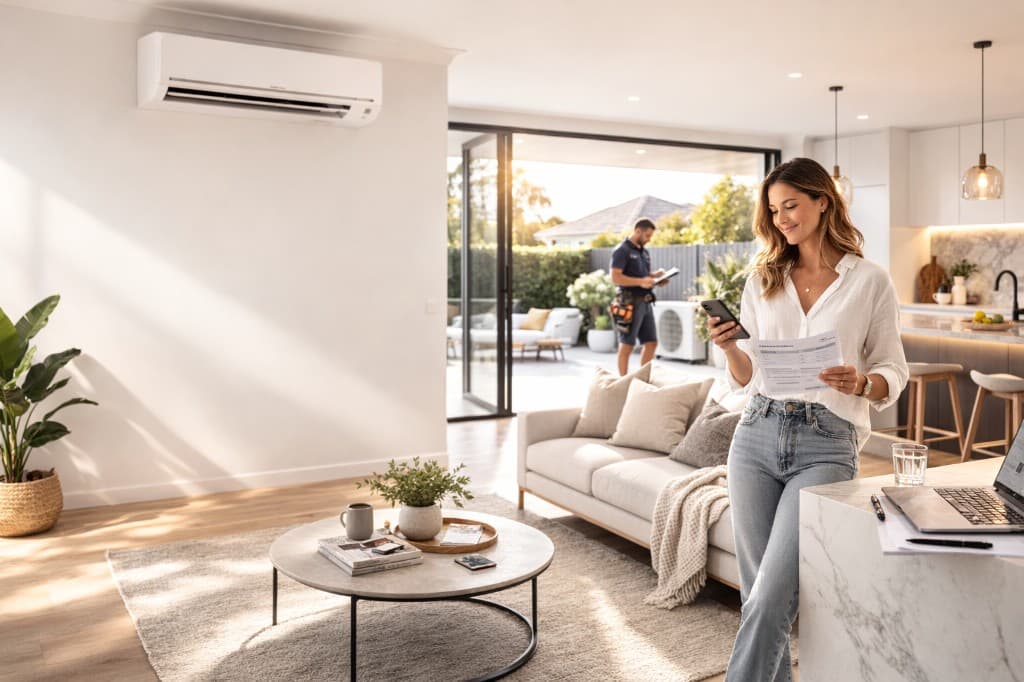
Air Conditioning Collaroy Plateau
Collaroy Plateau sits on the escarpment above Collaroy Beach and Long Reef, a quiet grid of 1950s to 1970s fibro and brick-veneer homes along Plateau Road and Veterans Parade that trade the salt of the beach below for wind, ocean views and thin insulation. Air conditioning quotes here should be sized for uninsulated mid-century walls and east-facing glass, not copied from a beachfront job.
Every installation, service and repair is performed by our team of NSW-licensed contractor partners under Quotcha's coordination.
What we do
How can we help in Collaroy Plateau?
Collaroy Plateau is part of our wider Northern Beaches air-conditioning service area.
Local context
What Affects Air Con Quotes in Collaroy Plateau
Collaroy Plateau (NSW 2097) has factors that materially affect installation and repair pricing.
Elevated position
The plateau sits above Collaroy Beach, reducing direct salt spray but catching more wind. Standard outdoor units are generally adequate. Wall brackets on the eastern brow above Anzac Avenue need wind-rated fixings, and a condenser placed on a gusty corner of the escarpment works harder to reject heat than one tucked into a sheltered side passage.
Family homes
Predominantly freestanding 3 to 4 bedroom homes with good roof cavities and block sizes suitable for ducted or multi-split systems. The level blocks in the middle of the plateau make ground-level condensers easy, while the houses stepping down the eastern and western edges often have living areas below the street and may suit a multi-head system instead.
Ocean views & glazing
Many homes have large east-facing windows for ocean views, which increases morning heat gain and should be factored into heat-load calculations. On the escarpment edge that glass is often full height and unshaded, so a living room facing Long Reef can need noticeably more capacity in the morning than a west-facing room of the same size.
Mid-century housing stock
The plateau's 1950s to 1970s fibro and brick-veneer homes typically have minimal wall and ceiling insulation. A heat-load calculation often returns 20 to 30% higher capacity than equivalent modern builds. Fibro walls may also contain asbestos, so the quote should state how the pipework penetration is being handled and by whom.
Northern Beaches
Pricing, installation and repair details for Northern Beaches
Typical air conditioning prices, what an install or repair involves, licensing checks and how the process works are covered on our Northern Beaches air conditioning page so this page can stay focused on what is specific to Collaroy Plateau.
FAQs
Air Conditioning Collaroy Plateau Frequently Asked Questions
Do Collaroy Plateau homes need marine-grade units?
Generally not. The elevated, set-back position reduces salt exposure. However, homes on the eastern escarpment with direct ocean exposure may still benefit from coated coils. The streets along the brow above Collaroy get salt on a strong nor'easter or southerly, while the blocks back towards Cromer are far enough removed that a standard coil is the sensible choice.
What type of air con is best for Collaroy Plateau?
Ducted reverse-cycle with zone control is the most popular choice. Typical installations for a 4-bedroom home cost $10,000 to $15,000 depending on zones and brand. Adding ceiling insulation at the same time is often the best value item on the whole quote, because it lets a smaller ducted unit do the job in an uninsulated 1960s house.
Should the quote for a Collaroy Plateau home include insulation?
It is worth asking. Many of the original fibro and brick-veneer houses have little or nothing in the ceiling, and a ducted system in an uninsulated roof space loses a lot of its output before the air reaches the rooms. A good installer will mention it, and a quote that pairs insulated duct with a suggestion to insulate the ceiling is being honest about the house.
What size split system do I need?
For a typical bedroom (10–15m²), a 2.0–2.5kW split system is sufficient. Living areas (25–40m²) generally need 5.0–7.0kW. Open-plan living/kitchen areas may need 7.0–9.0kW. West-facing rooms with afternoon sun exposure should size up by 0.5–1.0kW. A proper heat load calculation is recommended.
Helpful Guides
Air Conditioning Guides for Collaroy Plateau Homeowners
We Also Service These Nearby Northern Beaches Areas
Air conditioning installation and repairs across every suburb near Collaroy Plateau.
Other Trades in Collaroy Plateau