
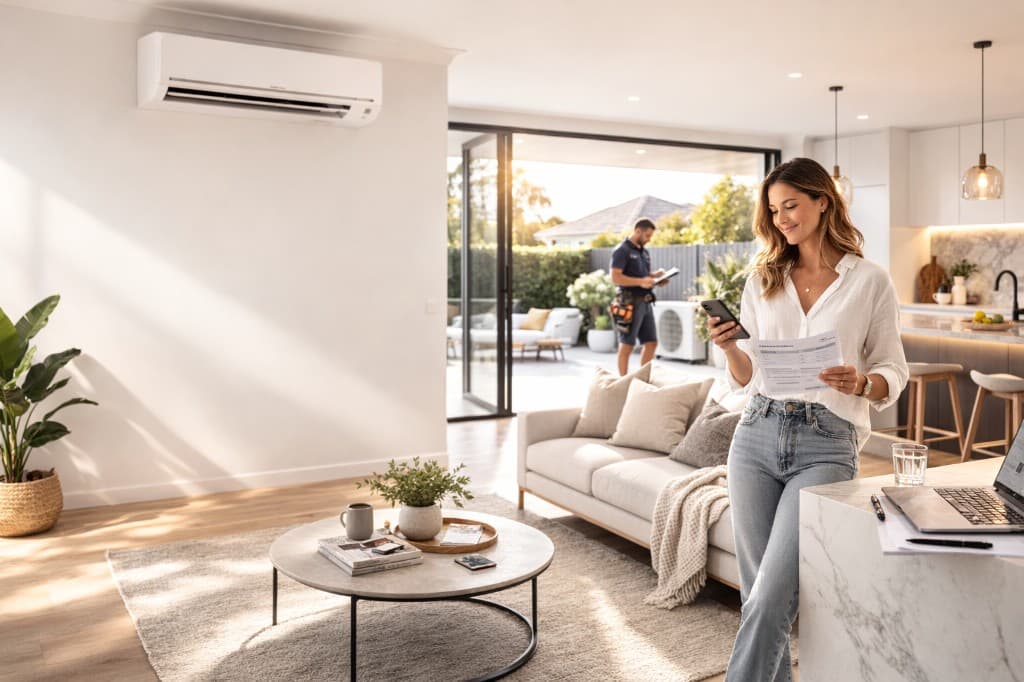
Air Conditioning Bilgola Plateau
Bilgola Plateau sits on the high ground between Bilgola Beach and Pittwater, a leafy grid of 1960s and 1970s brick and weatherboard family homes along Plateau Road that catches ocean glimpses to the east, the north-westerly across the water and gum-leaf litter from the gullies on every side. Air conditioning quotes here need sizing that respects the late-afternoon heat, and a coil choice that depends on which edge of the plateau the house is on.
Every installation, service and repair is performed by our team of NSW-licensed contractor partners under Quotcha's coordination.
What we do
How can we help in Bilgola Plateau?
Bilgola Plateau is part of our wider Northern Beaches air-conditioning service area.
Local context
What Affects Air Con Quotes in Bilgola Plateau
Bilgola Plateau (NSW 2107) has factors that materially affect installation and repair pricing.
Elevated & leafy
The plateau position provides some protection from the worst salt spray but still receives coastal moisture. Marine-grade coatings are a sensible precaution. The eastern brow above the Bilgola Bends gets the nor'easter with real salt in it, while the middle of the plateau around the shops is far enough back that the coating is a preference rather than a necessity.
Family homes
Bilgola Plateau is predominantly freestanding houses on good-sized blocks, providing flexibility for system design and outdoor unit placement. The 1960s and 1970s homes have pitched tile roofs that take ducted systems comfortably, and side passages wide enough that the condenser can sit at ground level away from the neighbour's bedroom window.
Moderate access
Flatter than the beach suburb below, with generally good vehicle access for installers. Most jobs need no crane and the pipe runs are short, so a Bilgola Plateau quote should sit well below a Bilgola Beach one for the same equipment, and an access surcharge here should come with a specific reason.
Plateau north-westerly exposure
The plateau catches north-westerly summer winds carrying inland heat from the Hawkesbury. North and west-facing rooms reach peak loads later in the day, so afternoon cooling demand is sustained well past 6pm. A heat-load calculation should reflect that late peak, and an inverter that runs efficiently at part load through the evening is the right fit.
Gully leaf litter
Bush gullies cut into the plateau on several sides and the tree cover is dense, so condensers collect leaf and bark and sit in shade for much of the day. Shade helps efficiency, but a top guard, clear airflow around the unit and a hose-down each season keep the coil doing its job.
Northern Beaches
Pricing, installation and repair details for Northern Beaches
Typical air conditioning prices, what an install or repair involves, licensing checks and how the process works are covered on our Northern Beaches air conditioning page so this page can stay focused on what is specific to Bilgola Plateau.
FAQs
Air Conditioning Bilgola Plateau Frequently Asked Questions
Is marine-grade air con necessary on Bilgola Plateau?
Recommended but not essential for every property. Homes with direct ocean exposure or on the eastern edge of the plateau should definitely use marine-grade coils. For a house in the centre of the plateau a standard coil with an annual rinse is a reasonable saving, and a quote should say which case applies rather than charging every address the coastal premium.
What's a typical air con setup for Bilgola Plateau?
Most homes suit a ducted reverse-cycle system with 3 to 4 zones, or a combination of 2 to 3 split systems targeting main living areas and bedrooms. Weight the capacity towards the north and west rooms that carry the late-afternoon load, and ask for the zone plan and outlet count on any ducted quote.
Why does a Bilgola Plateau home stay hot into the evening?
The plateau's height and its exposure to the north-westerly mean the sea breeze that cools the beach below often does not arrive up top until late, and the brick homes hold the day's heat in their walls. A quote should size for that sustained evening load and favour a unit that runs quietly at low speed for hours over one that blasts and stops.
What size split system do I need?
For a typical bedroom (10–15m²), a 2.0–2.5kW split system is sufficient. Living areas (25–40m²) generally need 5.0–7.0kW. Open-plan living/kitchen areas may need 7.0–9.0kW. West-facing rooms with afternoon sun exposure should size up by 0.5–1.0kW. A proper heat load calculation is recommended.
Helpful Guides
Air Conditioning Guides for Bilgola Plateau Homeowners
We Also Service These Nearby Northern Beaches Areas
Air conditioning installation and repairs across every suburb near Bilgola Plateau.
Other Trades in Bilgola Plateau