
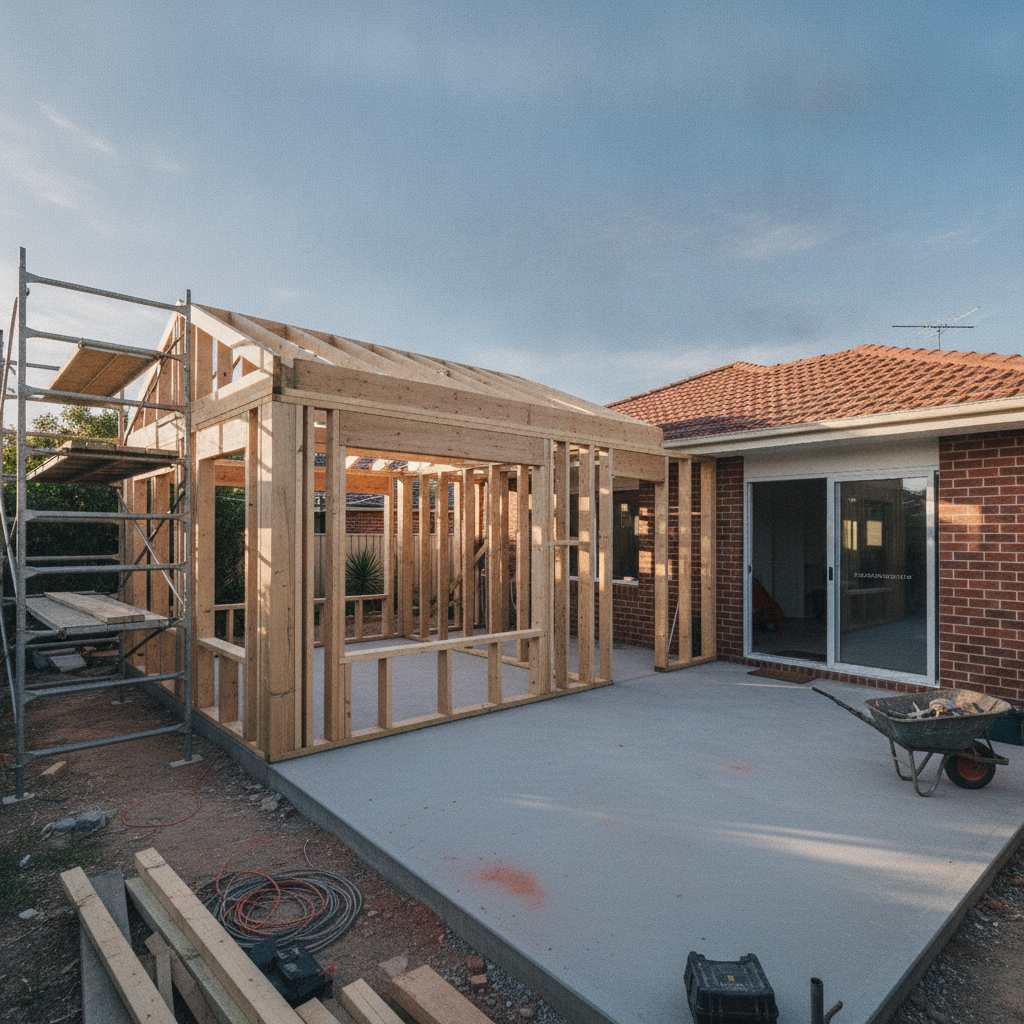
Last updated 24 August 2026·Quotcha editorial team — built from real Australian quote data
In this guide
The first number every homeowner wants is the cost per square metre, and the honest answer in 2026 is a wide one: $3,000 to $5,500 per square metre for a ground floor extension in Sydney or Melbourne, $2,600 to $4,500 in Brisbane, Perth and Adelaide, and $4,000 to $7,000 per square metre for a second storey. A 40 square metre single-storey addition therefore lands somewhere between $110,000 and $220,000 before you have chosen a tap.
That spread is not builders being vague. It is the difference between a rectangular room off the back of a brick veneer house on a flat block, and a cantilevered addition over a sloping site with a new kitchen inside it. Here is what drives the number, what is usually left out of the per-metre figure, and how to compare two builders' quotes on the same job.
Extension cost per square metre in 2026
Turnkey rates for a standard quality build, including structure, roofing, cladding, windows, electrical, plumbing rough-in, plaster, paint and floor coverings, excluding kitchen and bathroom fit-out:
- Ground floor extension, basic finish: $2,600 to $3,800 per m2
- Ground floor extension, standard finish: $3,200 to $4,800 per m2
- Ground floor extension, high-end finish: $4,500 to $7,000 per m2
- Second storey addition: $4,000 to $7,000 per m2, because it includes structural work to the existing house, a new stair and a new roof
- Granny flat or detached studio (60m2): $130,000 to $220,000 complete
Sydney and Melbourne sit at the top of each range. Brisbane, Perth and Adelaide run 10 to 20 percent below. Regional builds can be cheaper on labour but more expensive on materials delivery and trade availability.
Kitchens and bathrooms are priced separately because they swing the total more than any other item. A new kitchen adds $25,000 to $60,000. A new bathroom adds $20,000 to $45,000. A laundry adds $8,000 to $18,000.
What is hiding behind the per-metre rate
The per-square-metre figure is a useful sanity check and a poor budget. Every one of these is real money on top:
Design and approvals. Architect or building designer $8,000 to $25,000. Structural engineer $2,500 to $6,000. Council DA or CDC fees $2,000 to $8,000 including a private certifier. Surveys, soil tests and a BASIX or energy report add $2,000 to $5,000. Budget 8 to 15 percent of the build cost for the paperwork before a shovel goes in.
Site conditions. Sloping blocks need more excavation and higher footings. Reactive clay soils (common across western Sydney, Melbourne's north and Adelaide) need engineered slabs. Rock adds $5,000 to $20,000 in excavation alone. Poor access that keeps a bobcat or crane off the site means hand labour.
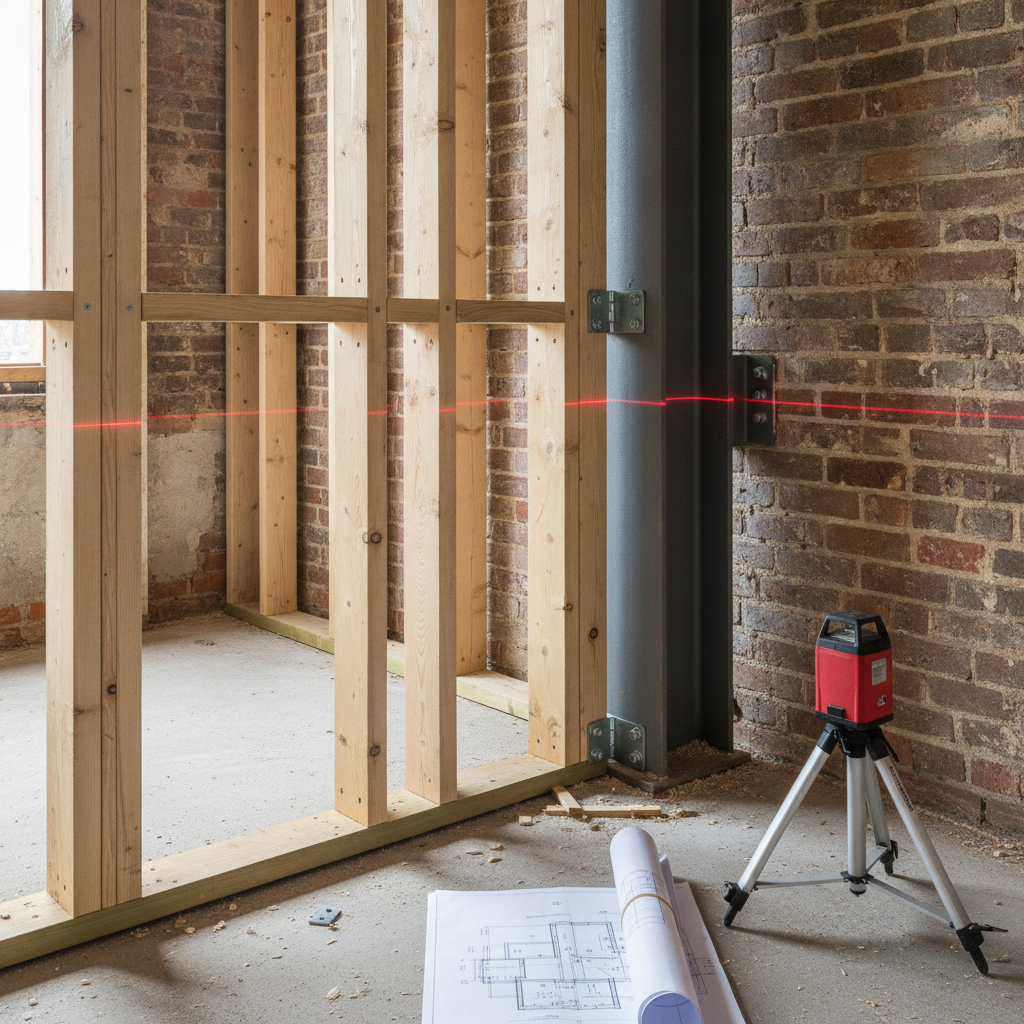
Tying into the existing house. Removing a load-bearing wall to open the old house into the new space needs a steel beam ($3,000 to $8,000 installed). Matching an old roof pitch, brick colour or floor level costs more than a standalone box. Rewiring or replumbing the old section to meet current code often turns up once walls are open.
Services. Upgrading the switchboard (usually required when adding circuits) $2,000 to $4,000. Moving a sewer line or stormwater $3,000 to $10,000. A larger hot water system or a second unit.
Demolition and disposal. Removing a rear verandah, old lean-to or garage: $3,000 to $12,000. Asbestos in the old section, common in pre-1990 homes, adds licensed removal at $60 to $120 per square metre of sheeting.
Landscaping, driveways and fences. Never in the build price, always needed afterwards. $10,000 to $40,000.
Living elsewhere. A second storey addition usually means moving out for 3 to 6 months. Rent and storage can reach $15,000 to $30,000.
A realistic all-in budget is the builder's quote plus 20 to 30 percent for the items above and a contingency. Builders who quote the per-metre rate as the total are quoting the part they control, not the project.
Get a quote in your suburb
See real prices for jobs like this in your area — we use actual quote data from local tradies.
Ground floor or second storey?
The second storey costs more per square metre but keeps your yard, which in inner suburbs is worth more than the difference. The ground floor extension is cheaper, faster and lets you stay in the house during the build, but eats the block.
Rules of thumb builders use:
- If the block has room and the yard is big, go out. Ground floor is 30 to 40 percent cheaper per metre and 2 to 3 months faster.
- If the existing house has a solid slab and framing that an engineer will certify for a second storey, going up avoids losing the yard and can add more value in tight suburbs.
- If the existing house is old, brick on strip footings, or has a hipped roof that needs full replacement, the structural cost of going up can exceed the saving on land use. Get an engineer's opinion before you fall in love with either plan.
How long does an extension take?
- Design, engineering and approvals: 3 to 6 months (longer for a DA with neighbour objections or a heritage overlay)
- Ground floor extension build: 3 to 5 months
- Second storey addition: 5 to 8 months
- Fit-out and handover: 3 to 6 weeks within the above
Weather, material lead times and trade availability push every one of these. Windows and structural steel are the usual culprits, at 6 to 10 weeks lead time. A builder who quotes "12 weeks" for a second storey is either exceptional or optimistic; ask for their last three completed projects and the actual durations.
Comparing builder quotes
Two quotes for the same plans routinely differ by 30 percent. Before assuming the cheaper one is a bargain:
- Is it a fixed price contract or cost-plus? Fixed price means the builder carries the risk. Cost-plus means you do.
- What are the provisional sums and prime cost items? These are allowances for things not yet chosen (tiles, tapware, appliances). A low quote often has low allowances that you exceed at the first showroom visit. Compare allowance amounts line by line.
- Is site preparation included? Excavation, retaining walls and fill are frequently "excluded, to be quoted after inspection".
- Which finishes are specified? "Standard finish" means nothing. Ask for the specification schedule: brand of windows, type of cladding, plaster grade, paint brand, flooring product.
- Is the builder licensed for the value of the work? Every state licences builders and sets a threshold above which a written contract and home warranty insurance are mandatory. In NSW that is $20,000 for Home Building Compensation Fund cover; in Victoria $16,000 for Domestic Building Insurance; in Queensland $3,300 for QBCC Home Warranty. The insurance certificate must be issued before you pay a deposit.
- What is the deposit? Legally capped at 5 percent in Victoria and 10 percent in NSW for domestic work. A builder asking for 20 percent up front is a warning.
- What is the progress payment schedule? Payments should be tied to completed stages (slab, frame, lock-up, fit-out, completion), not calendar dates.
The bottom line
Budget $3,000 to $5,500 per square metre for a ground floor extension and $4,000 to $7,000 for a second storey in the major cities, then add 20 to 30 percent for design, approvals, site work and the things nobody mentions until you are committed. Compare builders on their specification schedule and allowances, not on the headline per-metre rate, and do not sign until the home warranty insurance certificate is in your hand.
Frequently asked questions
How much does a home extension cost per square metre in Australia?
In 2026 a ground floor extension costs $3,000 to $5,500 per square metre in Sydney and Melbourne and $2,600 to $4,500 in Brisbane, Perth and Adelaide, for a standard finish excluding kitchens and bathrooms. A second storey addition runs $4,000 to $7,000 per square metre because it includes structural work to the existing house, a stair and a new roof.
How much does a 40 square metre extension cost?
A 40 square metre single-storey extension lands between $110,000 and $220,000 depending on city, finish level and site conditions, before design, approvals, landscaping and any kitchen or bathroom inside it. A realistic all-in budget is the builder's quote plus 20 to 30 percent for those items and a contingency.
Is it cheaper to extend out or build up?
Extending at ground level is 30 to 40 percent cheaper per square metre and 2 to 3 months faster, and you can usually stay in the house. Building up keeps your yard, which in tight inner suburbs is often worth the difference, but the existing slab, framing and roof must be certified by an engineer and you will likely need to move out for 3 to 6 months.
What is not included in a builder's per square metre price?
Usually: design and engineering ($10,000 to $30,000), council or certifier fees, site excavation and retaining, tying into the existing house (steel beams, matching roof and floor levels), switchboard and services upgrades, demolition and asbestos removal, landscaping and driveways, and the kitchen and bathroom fit-out. Together these add 20 to 30 percent to the build price.
How long does a home extension take?
Allow 3 to 6 months for design, engineering and approvals, then 3 to 5 months to build a ground floor extension or 5 to 8 months for a second storey. Windows and structural steel are the usual delays at 6 to 10 weeks lead time. Ask the builder for the actual durations of their last three completed jobs rather than relying on the number in the contract.
Do I need home warranty insurance for an extension?
Yes, above each state's threshold: $20,000 in NSW (Home Building Compensation Fund), $16,000 in Victoria (Domestic Building Insurance) and $3,300 in Queensland (QBCC Home Warranty). The builder must take out the policy for your job and give you the certificate before accepting a deposit or starting work. No certificate, no deposit.